
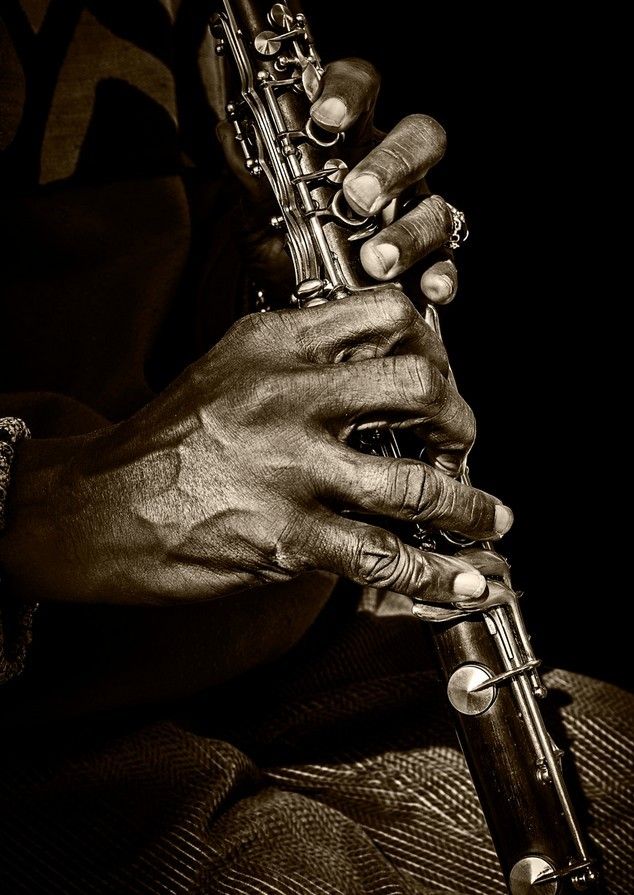
Clarinet Greats
Sidney Bechet – One of jazz’s first great soloists, Bechet brought passion, virtuosity, and a powerful blues-infused sound to both clarinet and soprano saxophone. Many historians consider him the greatest jazz clarinetist of the early era.
Benny Goodman – The “King of Swing” helped bring jazz into the American mainstream during the 1930s and 1940s. His brilliant technique and impeccable tone made him the most famous clarinetist in jazz history.
Artie Shaw – Goodman’s chief rival during the Swing Era, Shaw combined technical mastery with sophisticated musical ideas and a lyrical, elegant style.
Johnny Dodds – A New Orleans pioneer whose earthy tone and expressive phrasing helped define early jazz clarinet playing, particularly through his work with Louis Armstrong and King Oliver.
Buddy DeFranco – The first major clarinetist to fully embrace bebop, DeFranco brought modern harmonies and dazzling virtuosity to the instrument.
Pee Wee Russell – One of jazz’s great individualists, Russell’s emotionally charged and unconventional approach made him a favorite among fellow musicians and critics alike.
Barney Bigard – Best known for his years with Duke Ellington’s orchestra, Bigard’s warm tone and New Orleans roots enriched some of the greatest recordings of the Swing Era.
Jimmy Giuffre – An innovative clarinetist, saxophonist, and composer, Giuffre helped pave the way for cool jazz and chamber jazz through his understated, exploratory style.
Eddie Daniels – Equally accomplished in classical and jazz settings, Daniels revived interest in jazz clarinet with his extraordinary technique and versatility.
Anat Cohen – One of the leading clarinetists of the modern era, Cohen blends jazz with Brazilian, Middle Eastern, and world music influences while honoring the instrument’s rich tradition.
Honorable mentions: Edmond Hall, Albert Nicholas, Tony Scott, Darnell Howard, Rolf Kühn, Don Byron, Ken Peplowski, Bob Wilber, Abe Most, and Irving Fazola.