
Bill Evans: Everybody Digs Bill Evans
Album Significance
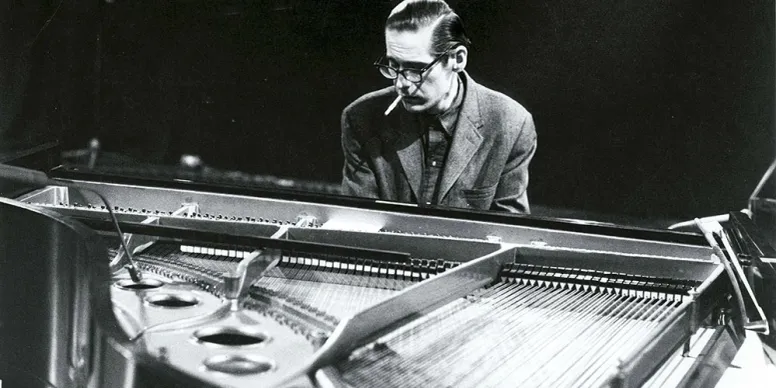
Everybody Digs Bill Evans is a transformative album, marking Evans’ emergence as a pivotal voice in modern jazz.
Standout Tracks
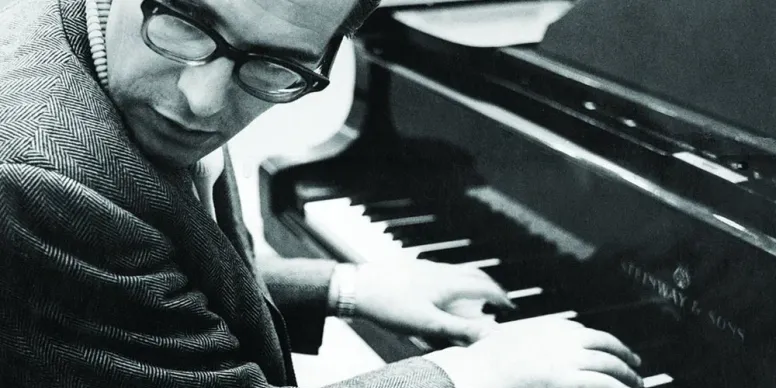
Bill Evans’ seminal album.
Historical Impact
Released in 1961, this album redefined solo piano jazz, influencing countless musicians and capturing the essence of the genre.
Join the Jazz Community
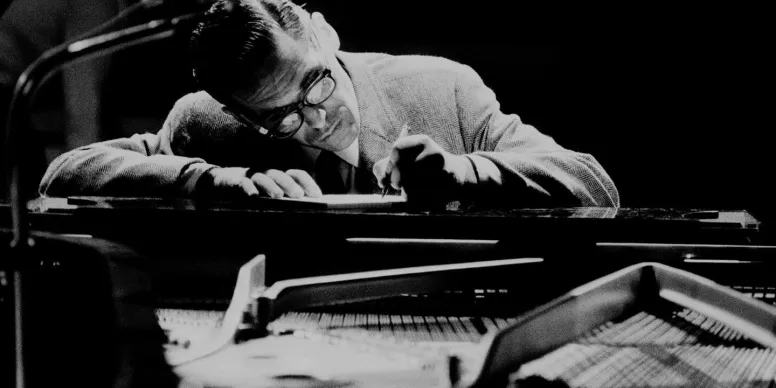
Connect with fellow jazz lovers and musicians in the Bay Area to share experiences and insights.
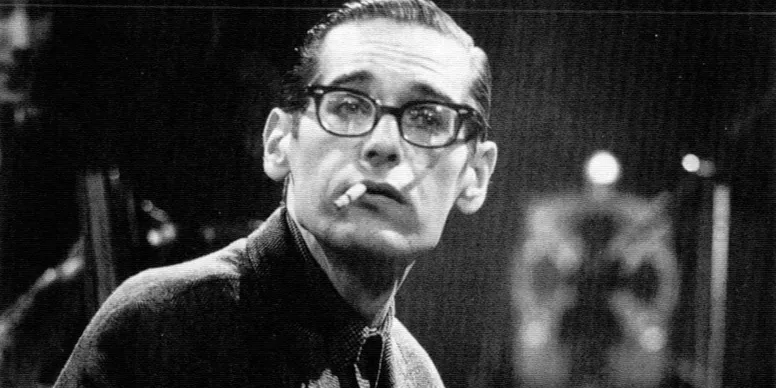
Bill Evans – Everybody Digs Bill Evans
Have you ever bought an album and found yourself playing one track over and over? For me, that was “Peace Piece,” from Everybody Digs Bill Evans.
Hi, I’m Glen Bell, and today I’m sharing another favorite from my desert island album list on my website, Bay Area Jazz Lines.
This was the first Bill Evans album I purchased. I loved his contribution to Miles Davis’s Kind of Blue, and exploring his own recordings gave me another way to appreciate his extraordinary touch and musical imagination.
Everybody Digs Bill Evans actually came before Kind of Blue. Recorded in December nineteen fifty-eight, it was his second album as a leader, following his time in Miles’s band that year.
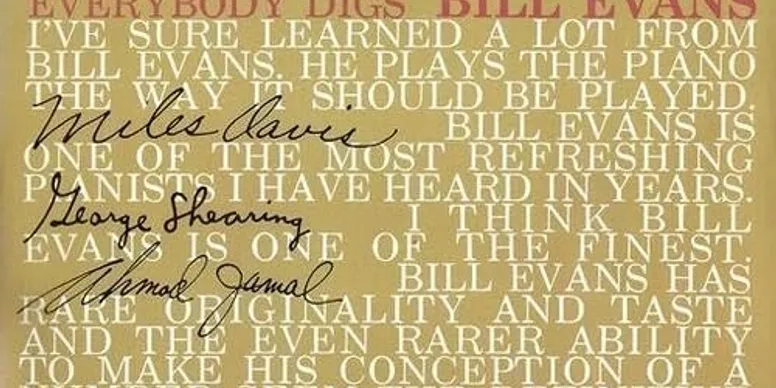
The cover tells an interesting story of its own. It features endorsements from Miles Davis, Cannonball Adderley, Ahmad Jamal, and George Shearing. His fellow musicians already recognized something special in Evans, and the album invited the public to hear it, too.
Joining him are Sam Jones on bass and Philly Joe Jones on drums. Their performances reveal a strongly swinging side of Evans, alongside the delicate, reflective playing so many of us love.
But the piece that captured me was Evans alone at the piano.
“Peace Piece” is a solo improvisation built over a repeating left-hand pattern. That steady foundation gives his right hand room to explore, with melodies that gradually become more adventurous.
Listen to the way the music changes while that underlying pattern stays with you. There’s beauty and stillness, but also tension and surprise. It holds your attention through the smallest details.
I can remember playing it again and again. That’s a big reason this album belongs on my desert island list: it contains music that made a lasting connection with me.
If you’re discovering Bill Evans, this is a wonderful place to spend some time. Enjoy the trio performances, then give “Peace Piece” your full attention.
Visit Bay Area Jazz Lines for more of my desert island picks, along with playlists and ways to enjoy jazz around the Bay Area.
What’s a recording you’ve found yourself playing over and over?
My Personal Favorite: Peace Piece
Features
Album Significance
Everybody Digs Bill Evans is a transformative album, marking Evans’ emergence as a pivotal voice in modern jazz.
Standout Tracks
Bill Evans’ seminal album.
Historical Impact
Released in 1961, this album redefined solo piano jazz, influencing countless musicians and capturing the essence of the genre.
Everybody Digs Bill Evans
Side one
“Minority” (Gigi Gryce) – 5:20
“Young and Foolish” (Albert Hague, Arnold B. Horwitt) – 5:48
“Lucky to Be Me” (Leonard Bernstein, Betty Comden, Adolph Green) – 3:35
“Night and Day” (Cole Porter) – 7:12
“Epilogue” (Bill Evans) – 0:38
Side two
“Tenderly” (Walter Gross) – 3:29
“Peace Piece” (Bill Evans) – 6:37
“What Is There to Say?” (Vernon Duke, Yip Harburg) – 4:49
“Oleo” (Sonny Rollins) – 4:04
“Epilogue” (Bill Evans) – 0:38
Bonus track:
“Some Other Time” (Leonard Bernstein, Betty Comden, Adolph Green) – 6:09
Personnel
Bill Evans – piano
Sam Jones – bass (tracks 1, 2, 4, 5, 7, & 8)
Philly Joe Jones – drums (tracks 1, 2, 4, 5, 7, & 8)
Where do I go after Everybody Digs Bill Evans?
1. Portrait in Jazz (1960)
The first great Bill Evans trio masterpiece featuring bassist Scott LaFaro and drummer Paul Motian.
Why you’ll love it: A direct evolution of the style heard on Everybody Digs Bill Evans, with even greater group interaction.
2. Sunday at the Village Vanguard (1961)
One of the most celebrated live jazz recordings ever made.
Why you’ll love it: Extraordinary trio communication and some of Evans’s most inspired playing.
3. Waltz for Debby (1961)
Recorded during the same legendary Village Vanguard sessions.
Why you’ll love it: Beautiful standards, lyrical improvisation, and the classic Evans trio at its peak.
4. Explorations (1961)
The studio counterpart to the Village Vanguard recordings.
Why you’ll love it: Sophisticated harmonies, inventive arrangements, and a perfect balance of intellect and emotion.
5. Moon Beams (1962)
A more introspective and ballad-oriented recording following the death of Scott LaFaro.
Why you’ll love it: Deeply emotional, reflective, and full of Evans’s signature lyricism.