
Miles Davis: Kind of Blue
Experience the Timeless Magic of Miles Davis’ ‘Kind of Blue’
Step into the world of jazz where innovation and emotion collide. Miles Davis’ ‘Kind of Blue’ is not just an album; it’s a revolutionary masterpiece that continues to resonate with musicians and enthusiasts alike. Dive deep into the textures and tones that shaped a generation of jazz in the Bay Area and beyond. Whether you are discovering it for the first time or revisiting this iconic work, let the harmonious melodies inspire your own musical journey.
Features
A Revolutionary Jazz Landmark
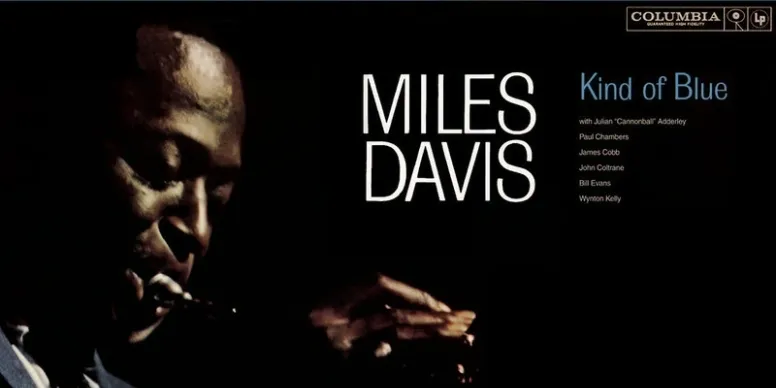
Released in 1959, ‘Kind of Blue’ is hailed as one of the greatest jazz albums of all time. Its innovative modal approach reshaped jazz music forever.
Lasting Influence on Jazz Musicians
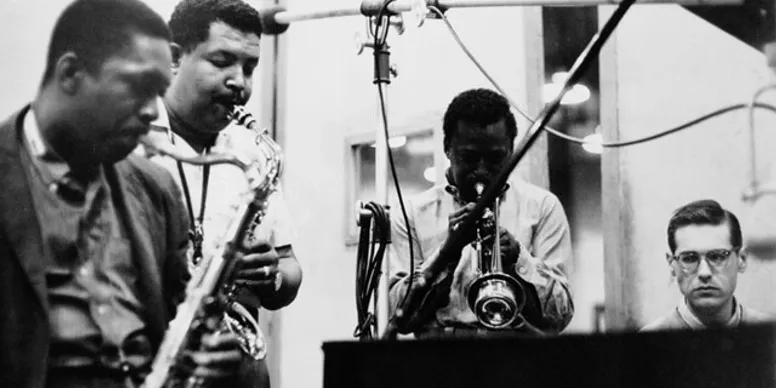
The impact of ‘Kind of Blue’ resonates through generations, inspiring countless jazz musicians and enthusiasts in the Bay Area and beyond to explore its rich sonic textures.
A Revolutionary Jazz Landmark
Released in 1959, ‘Kind of Blue’ is hailed as one of the greatest jazz albums of all time. Its innovative modal approach reshaped jazz music forever.
Discover the Timeless Brilliance of Miles Davis’ Kind of Blue
A Revolutionary Jazz Landmark
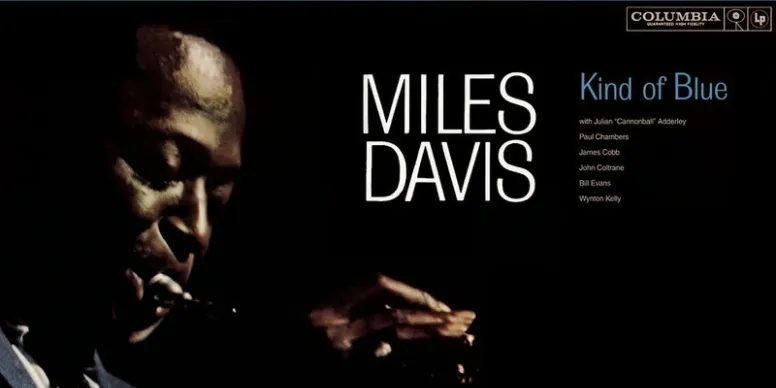
Released in 1959, ‘Kind of Blue’ is hailed as one of the greatest jazz albums of all time. Its innovative modal approach reshaped jazz music forever.
Lasting Influence on Jazz Musicians
The impact of ‘Kind of Blue’ resonates through generations, inspiring countless jazz musicians and enthusiasts in the Bay Area and beyond to explore its rich sonic textures.
Listen to Kind of Blue
So What
Freddie Freeloader
Blue in Green
All Blues
Flamenco Sketches
Personnel
Miles Davis — trumpet
John Coltrane — tenor saxophone
Julian “Cannonball” Adderley — alto saxophone
Bill Evans — piano
Wynton Kelly — piano on “Freddie Freeloader”
Paul Chambers — bass
Jimmy Cobb — drums
Miles Davis – Kind of Blue: A Jazz Masterpiece That Redefined the Genre
If I could take only one album to a desert island, it would be Miles Davis’s Kind of Blue.
Hi, I’m Glen Bell, and this is the first in a series sharing the albums on my desert island list at Bay Area Jazz Lines.
I first heard Kind of Blue in the early nineteen seventies, and it opened up a whole new world for me. It became my favorite album of all time, and it still holds that spot today.
Released in nineteen fifty-nine, it brought together an extraordinary group of musicians, including John Coltrane, Cannonball Adderley, Bill Evans, Paul Chambers, and Jimmy Cobb, alongside Miles on trumpet.
Part of what makes this album special is the space the musicians have to explore. Much of the music uses an approach called modal jazz, giving the players room to develop their ideas around scales rather than navigate a rapid series of chord changes. You don’t need to know the theory to appreciate how naturally the music flows.
Miles came to the sessions with simple musical sketches, leaving much for the musicians to discover together as they played. Listening to them, you can hear that sense of conversation—one musician offering an idea, another responding, with room for each voice.
From the unmistakable opening of “So What” to the blues of “Freddie Freeloader,” there’s so much to enjoy. But my personal favorite is “Flamenco Sketches.” For me, it captures the beauty and openness that make this album so special.
If you’re curious about jazz, Kind of Blue is a wonderful place to begin. And if you already know it, give it another listen.
Dive into the Soul of Jazz with ‘Kind of Blue’
One of the fascinating aspects of Kind of Blue is the minimal preparation that went into the recording sessions. Miles Davis famously kept the musical arrangements simple, providing only basic sketches of the melodies and scales to the band members. The musicians were given little more than a general idea of the mood and structure of the pieces, with much of the music being developed through spontaneous improvisation during the recording process. This approach was a departure from the more traditional, highly structured jazz arrangements of the time, and it allowed the musicians to explore and respond to each other’s playing in real time, contributing to the album’s unique sound and fluid, conversational style. This minimalist preparation helped foster the freedom and creativity that defines Kind of Blue.
Where do I go afer Kind of Blue
1. Sketches of Spain (1960)
A beautiful collaboration with arranger Gil Evans. Rich orchestral textures, Spanish influences, and some of Davis’s most haunting trumpet playing.
Best for: Fans of the mood and spaciousness of “Flamenco Sketches.”
2. Milestones (1958)
Recorded just before Kind of Blue, this album contains the title track “Milestones,” one of the earliest and most influential modal jazz recordings.
Best for: Listeners who want to hear the bridge between hard bop and the modal style of Kind of Blue.
3. Someday My Prince Will Come (1961)
Features a relaxed, melodic atmosphere and memorable contributions from John Coltrane on several tracks.
Best for: Those who enjoy the lyrical, late-night feel of Kind of Blue.
4. ‘Round About Midnight (1957)
The first great recording by Davis’s classic quintet. More traditional than Kind of Blue, but filled with elegant ballads and unforgettable trumpet work.
Best for: Exploring the roots of Davis’s mature style.
5. In a Silent Way (1969)
A very different album, but one that shares Kind of Blue’s emphasis on atmosphere, space, and mood. A landmark recording that helped launch jazz fusion.
Best for: Fans who appreciate the meditative side of Kind of Blue and want to hear where Davis went next.